
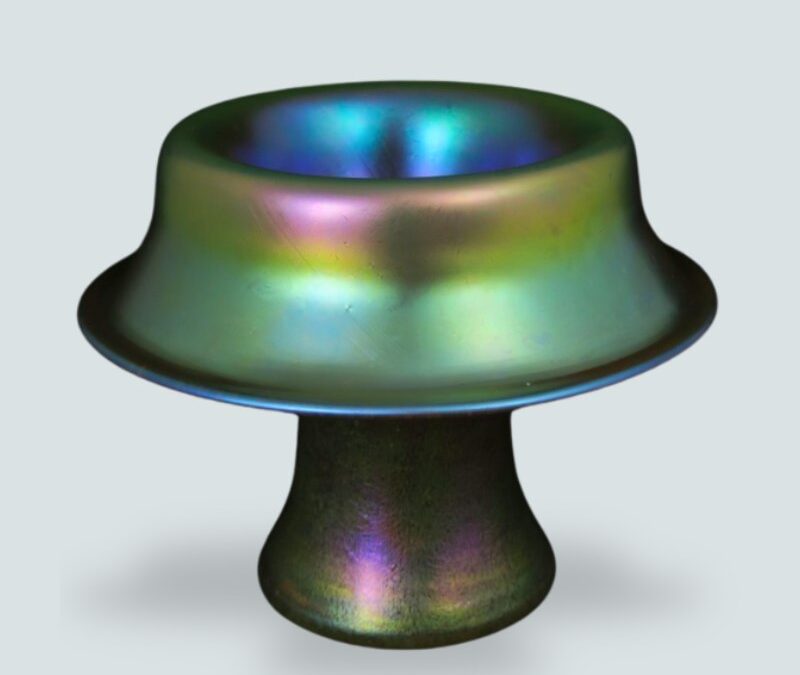
There’s a moment every glass lover remembers: the first time you tilt a piece of true Loetz under a lamp and the surface seems to come alive. Not just shiny, but deep. Oil-slick iridescence shifting through peacock greens and violet blues, metallic highlights that slide across the form, and that unmistakable sense that you’re holding a small piece of Art Nouveau history.
Loetz (more properly Johann Loetz Witwe) is one of the most desirable names in European decorative arts, and for good reason. The best examples are genuinely museum-level objects, such as the stunning Loetz Arcadia Bowl or the exquisite Loetz Neptun Vase, but the market is also full of lookalikes, later pieces, and well-meaning misattributions. If you’re thinking of buying, selling, or simply understanding what you own, here’s what really drives Loetz value, and how to judge authenticity with your eyes rather than wishful thinking.
A quick bit of context: why Loetz matters
Loetz was a major Bohemian glassworks (today’s Czech Republic), and in the late 19th and early 20th century it became a powerhouse of Art Nouveau glass. The firm developed and refined iridescent techniques that could rival Tiffany and the French studios, but with a distinctly Central European character: sensuous forms, botanical relief work, and a wide range of surface effects from ethereal to dramatic.
Loetz isn’t one “look”. It’s a whole vocabulary of finishes and pattern families, some produced for only a short time, some made in small numbers like the rare Loetz Ausfuhrung 134 Bowl or the sought-after Loetz Neptun Vase/Jug, and some copied endlessly by other factories. That variety is part of the fun, and also part of the risk.
What makes Loetz glass so valuable?
1) The best Loetz isn’t just pretty, it’s technically exceptional
Top Loetz pieces show a level of control that’s hard to fake: even thickness, confident shaping, smooth transitions, and iridescence that feels integrated rather than sprayed on. Many high-value pieces have complex surface treatments that require multiple stages and serious skill, such as:
- Iridescent finishes with strong colour travel (greens to purples to golds).
- Relief decoration (raised trails, prunts, pressed or moulded elements).
- Cased glass or layered effects that give depth under the surface.
- Intricate patterning that remains crisp around curves and constrictions.
In other words, you’re often paying for virtuosity, not just a brand.
2) Rarity isn’t just “old”, it’s “specific”
Age helps, but Loetz value is driven far more by which line, which pattern, and which form. Some decors were made briefly or in limited runs. Certain shapes were made for exhibitions or fashionable retailers. Some were produced in small quantities because they were difficult to make consistently.
A common Loetz form in a common finish can be collectible without being expensive. A rare decor on an elegant, well-proportioned shape can leap into a different bracket entirely.
For instance, a Loetz bowl or a Diana cisele vase could be valuable depending on their specific attributes.
3) Design pedigree and Art Nouveau appeal
Loetz sits right in the sweet spot for collectors: the Art Nouveau period, with its flowing organic forms, and a broad international audience. Pieces that strongly express that era tend to command more money, especially:
- Tall, sinuous vases with confident curves.
- Naturalistic motifs (vines, tendrils, florals) done with restraint.
- Dramatic asymmetry or sculptural handles and rims.
- Forms that feel “designed”, not merely utilitarian.
If it looks like it belongs in a turn-of-the-century interior with wrought iron and carved wood, you’re in the right territory.
4) Condition plays a huge role (and it’s more nuanced than people think)
With Loetz, condition is everything, but you have to judge it intelligently.
- Chips to the rim matter a lot, because the rim is where your eye goes first.
- Cracks are usually a deal-breaker for serious collectors.
- Wear to iridescence can happen, especially on high points or bases.
- Polished rims (ground and re-finished) can make a piece look “too perfect”. In the right light, polishing can soften crisp edges and alter the way the finish behaves.
Minor base wear is normal. A little manufacturing character is normal too. But anything that disrupts the silhouette or the surface read will usually pull value down sharply.
5) Provenance and documentation can add real money
Loetz is one of those areas where a good paper trail can genuinely move the needle. Auction history, old labels, reputable dealer invoices, or being published in reference material can all add confidence. And confidence is value.
Signed pieces and pieces with well-documented decors tend to sell faster, and often higher, because the buyer isn’t gambling.
6) The market loves the “right” finishes
Certain Loetz finishes and decor families are particularly sought after. Even if you don’t memorise names, it helps to recognise categories that collectors chase.
You’ll often see strong demand for:
- High-quality iridescent work with rich, even “oil slick” colour play.
- Naturalistic relief decoration that feels integrated with the form.
- Elegant, restrained pieces where the finish does the talking.
The key is this: the finish should look intentional and controlled, not loud for the sake of it.
How to spot a genuine Loetz piece (a practical checklist)
Let’s get into the part people actually need. Authenticating Loetz isn’t always straightforward, because not all pieces are marked, and many Bohemian factories produced similar effects. Still, there are strong signals you can learn to read.
1) Start with the overall quality: shape, balance, and “confidence”
Before you even look for a mark, ask a simple question: does it look like a master object?
Genuine Loetz, especially better examples, tends to have:
- Balanced proportions that feel purposeful.
- Clean transitions at the neck, shoulder, and foot.
- A rim that looks finished with intention, not clumsy or wavy in a cheap way.
Some Art Nouveau glass is meant to be organic and free, yes, but “organic” should still look controlled.
2) Learn the difference between iridescence and “surface shine”
A lot of misattributed glass has iridescence that reads like a thin, flashy coating. Loetz iridescence, at its best, has depth. It shifts with the angle, but it also feels bonded to the glass rather than sitting on top like a film.
Do this in person if you can:
- Tilt the piece slowly under a single light source.
- Look for smooth colour travel rather than abrupt, patchy changes.
- Check whether the finish is even around the form, especially near constrictions and around handles or applied elements.
Uneven, blotchy shine can still be old, but it’s a warning sign.
Additional Resources
If you’re looking to deepen your understanding of other types of glass that share similarities with Loetz pieces, consider exploring Kralik glass, Pallme König glass, or even buying art glass for your collection.
3) Check the pontil and base finishing (it tells stories)
Many Loetz pieces have a ground and polished pontil area (the scar where the pontil rod was attached). The quality of this finishing often aligns with the quality of the piece.
What to look for:
- A base that’s appropriately finished for the type of object.
- Wear that makes sense: light scratching from age is normal.
- Watch out for bases that look artificially aged, or conversely, too freshly polished without a good reason.
A fully polished base on something that should show honest wear can be suspicious, unless you know it has been restored.
4) Look for signatures and marks, but don’t rely on them blindly
Here’s the tricky truth: many genuine Loetz pieces are unmarked, and some marked pieces are… complicated.
You might encounter:
- Acid-etched or engraved marks.
- Painted or enamel marks.
- Occasional paper labels (rare to survive, but they do exist).
If you do see a mark:
- Check whether it looks period-correct and naturally worn.
- Be cautious of marks that look fresh, too bold, or oddly placed.
- Compare with examples from reputable references or specialist dealers.
A mark helps, but the glass must still make sense on its own merits.
5) Identify the decor (pattern) and see if it “matches” known Loetz work
Collectors often talk about Loetz by decor names or catalogue numbers. You don’t need to become a walking encyclopaedia, but you can use a simple method:
- Photograph the piece clearly (front, back, base, close-ups of detail).
- Compare it to known examples in reputable books, museum collections, and established auction archives.
- Look for consistency in the pattern’s rhythm, scale, and how it behaves around the shape.
Copies often get the spirit right but miss the specifics. The trails are a touch too thick, the pattern repeats awkwardly, the motif placement feels random, or the colour palette is slightly off.
6) Beware of common misattributions (these catch people all the time)
If you spend any time around “Loetz” listings, such as the stunning Loetz Series III vase or the intricately designed Loetz Luna Dragonfly vase, you’ll notice a pattern: many pieces are described as Loetz because they are iridescent and old-looking.
Common pitfalls include:
- Other Bohemian and Austrian makers with similar Art Nouveau styles.
- Later 20th-century iridescent art glass that borrows the look.
- Pieces that are genuinely period, but not Loetz.
This doesn’t mean the item is bad. It just means you shouldn’t pay Loetz money for it.
7) Weight and feel can be a subtle clue
This is not a hard rule, but genuine period Art Nouveau glass often has a particular “feel” in hand: not clunky, not toy-light, with a sense of density that suits the form. If a piece feels oddly heavy for a delicate-looking vase, or strangely light for something that should have presence, pause and reassess.
8) Use a loupe: you’ll see things photos hide
A small jeweller’s loupe can reveal:
- Fine scratches consistent with age.
- Tiny bubbles or material traits typical of glassmaking.
- Evidence of restoration: polishing swirls, filled chips, reworked rims.
Restoration isn’t automatically a no, but it must be priced in.
A simple “should I buy this?” approach
If you’re standing in an antiques shop, fair, or viewing a listing online, here’s a straightforward way to stay sensible:
- Does the form look convincingly Art Nouveau and well-balanced?
- Is the surface effect deep and integrated, not patchy or flashy?
- Does the base finishing look honest and appropriate?
- Can you find close matches in reputable references or auction archives?
- Is the price consistent with uncertainty? If it’s unmarked and undocumented, the price should reflect that risk.
For example, if you’re considering purchasing something like the Loetz Cisele vases or the Loetz Carneol vase, use these guidelines to verify their authenticity.
If you only have photos, ask for:
- Rim close-ups all around (chips love to hide).
- Base and pontil close-ups.
- A video under light to show iridescence movement.
- Dimensions and weight.
A seller who refuses basic condition photos is doing you a favour. Walk away.
Final thoughts: value is a mix of beauty, rarity, and trust
Loetz glass is valuable because it sits at the crossroads of history and sheer visual magic. When it’s right, it’s not just decorative. It’s a time capsule of Art Nouveau taste and industrial artistry, made with techniques that still feel daring over a century later.
If you’re trying to spot a genuine piece, don’t get hypnotised by iridescence alone. Trust proportion, finishing quality, and pattern logic. Look for honest wear, not theatrical age. And when in doubt, compare, research, and price the uncertainty into the deal.
That careful, slightly obsessive process is part of the joy. And when you finally find a piece that truly clicks, you’ll understand why collectors keep coming back to Loetz.
FAQs (Frequently Asked Questions)
What makes Loetz glass so special and valuable?
Loetz glass is prized for its exceptional technical quality, including even thickness, confident shaping, and integrated iridescence. The firm developed complex surface treatments like iridescent finishes with strong colour travel, relief decoration, cased glass layering, and intricate patterning. These features showcase virtuosity and artistic mastery beyond just the brand name.
Why is rarity important in determining the value of Loetz pieces?
Rarity in Loetz glass isn’t just about age but specific lines, patterns, and forms. Some decors were produced briefly or in limited quantities, certain shapes were made for exhibitions or exclusive retailers, and some were challenging to produce consistently. A rare decor on a well-proportioned shape can significantly increase a piece’s value compared to common forms with common finishes.
How does Art Nouveau design influence the appeal of Loetz glass?
Loetz glass embodies the flowing organic forms characteristic of the Art Nouveau period, which appeals to collectors internationally. Pieces featuring tall, sinuous vases with confident curves, naturalistic motifs like vines and florals done with restraint, dramatic asymmetry, sculptural handles or rims, and designed rather than utilitarian forms tend to command higher prices due to their strong expression of this era’s aesthetic.
What should I look for when judging the authenticity of Loetz glass by eye?
Authentic high-quality Loetz pieces display even thickness, smooth transitions, integrated iridescence that shifts through peacock greens and violet blues, complex surface treatments such as relief decoration and cased glass effects. The finish feels deep rather than sprayed on. Be cautious of lookalikes or later pieces that lack these technical virtuosity signs.
How does condition affect the value of Loetz glass?
Condition is crucial for Loetz glass valuation but requires nuanced judgement. Chips to the rim significantly reduce value since the rim draws immediate attention; cracks are usually deal-breakers for serious collectors; wear to iridescence can occur on high points or bases; polished rims may soften edges and alter finish behaviour negatively. Minor base wear and manufacturing character are normal but any damage disrupting silhouette or surface read lowers value sharply.
Where was Loetz glass produced and what characterises its style?
Loetz was a major Bohemian glassworks located in today’s Czech Republic. It became renowned in the late 19th and early 20th century for Art Nouveau glass with a distinctly Central European character: sensuous forms, botanical relief work, and a wide range of surface effects from ethereal to dramatic. Their iridescent techniques rivalled Tiffany and French studios but maintained unique regional aesthetics.